
Walk into any beauty store today and you’ll see “paraben-free” plastered across products like a badge of honor. Shampoos, moisturizers, serums, and foundations proudly announce the absence of parabens as though removing them makes the product safer, cleaner, and more worthy of your trust. But when did these preservatives become the skincare villain—and is that reputation actually deserved?
The controversy around parabens exploded in the mid-2000s after a single scientific study was misinterpreted by media outlets and quickly weaponized by the marketing industry. Fear spread faster than facts, and consumers understandably became cautious. Today, are this ingredient class harmful for skin is one of the most searched skincare questions—and the answer is more nuanced than most beauty brands want you to believe.
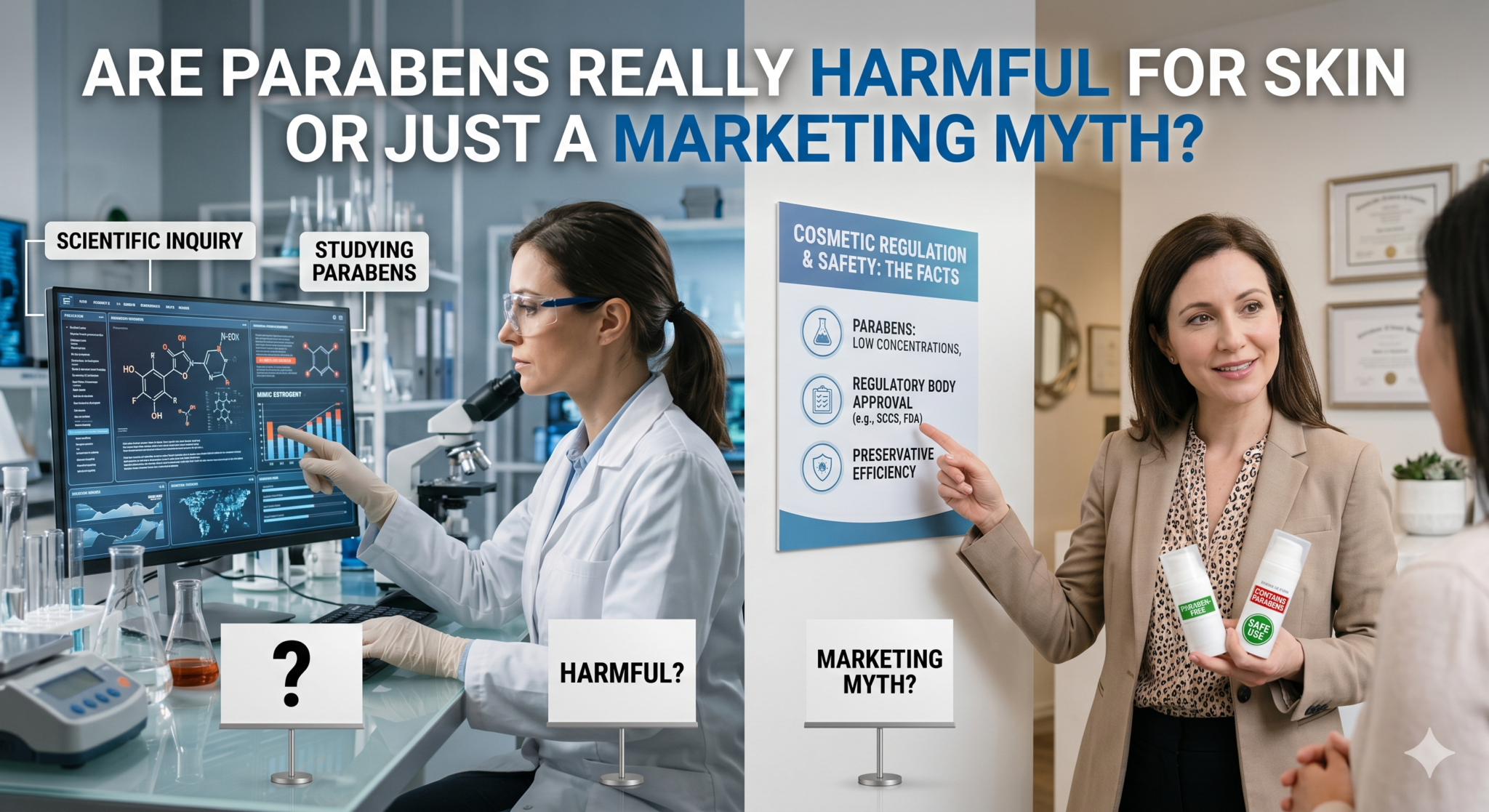
Here’s the reality: decades of scientific research and regulatory review by global health authorities suggest that parabens, at concentrations used in skincare, are safe for the vast majority of people. The “paraben-free” trend is largely a marketing phenomenon driven by consumer fear rather than scientific consensus.
This article cuts through the noise with evidence-based clarity. You’ll learn exactly what parabens are, why they became controversial, what global health authorities actually say, and whether you personally need to worry about them. No fearmongering, no marketing spin—just science-backed facts.
What Are Parabens in Skincare?
Parabens are a family of synthetic chemical compounds widely used as preservatives in cosmetics, skincare products, pharmaceuticals, and even food. Their primary function is straightforward and genuinely important: they prevent the growth of harmful bacteria, mold, and yeast in products that contain water, which would otherwise become breeding grounds for microorganisms that can cause serious skin infections.
Without preservatives like parabens, your favorite moisturizer could develop dangerous bacterial contamination within days or weeks of opening—potentially causing skin infections, eye irritation, or worse. Every water-based skincare product needs some form of preservation, and these compounds have been the industry standard for over 90 years precisely because they work effectively and reliably.
Why parabens are so commonly used:
- They’re highly effective at preventing microbial growth across a broad range of organisms
- They’re stable across a wide pH range, making them compatible with most formulations
- They’re effective at very low concentrations, minimizing exposure
- They’ve been extensively studied over decades, providing a substantial safety record
- They’re cost-effective, keeping products affordable
Common parabens found in skincare products include:
- Methylparaben — the most common, used in the widest variety of products
- Ethylparaben — frequently used alongside methylparaben
- Propylparaben — used in products requiring stronger preservation
- Butylparaben — used in smaller concentrations due to slightly stronger potency
- Isobutylparaben and Isopropylparaben — less common variations
On ingredient labels, parabens are easy to identify—they always contain the word “paraben” in their name. If you see any ingredient ending in “-paraben,” that’s what you’re looking at.
The typical concentration of parabens in skincare products is 0.01% to 0.3%, with regulatory bodies setting maximum allowed concentrations. These concentrations are extremely low—a deliberate formulation choice that allows this preservative to do their preservative job while minimizing any potential exposure-related concerns.
Understanding what parabens actually do—and that they serve a genuinely protective function—is essential context before evaluating whether the fear surrounding them is justified.
Why Did Parabens Get a Bad Reputation?
The paraben controversy has a specific origin story, and understanding it reveals how a single misinterpreted study can reshape an entire industry through a combination of media sensationalism and strategic marketing.
The 2004 study that started everything:
In 2004, British researcher Dr. Philippa Darbre published a small study that detected parabens in breast tumor tissue samples. The study examined 20 breast tumor samples and found traces of the compound in 18 of them. Headlines exploded: “These synthetic compounds Found in Breast Tumors!” The implication seemed clear and terrifying—this skincare preservative causes breast cancer.
But here’s what the media reporting missed entirely, and what caused decades of unnecessary consumer fear: finding this substance in breast tissue does not prove that parabens cause cancer. The study didn’t include control samples (tissue from women without cancer), so there was no comparison to determine whether the compound appeared in normal tissue too. It didn’t examine whether these traces came from cosmetics or other sources. It established correlation at best—and even that was shaky—not causation.
The study’s own author, Dr. Darbre, stated that the research didn’t prove parabens cause breast cancer. Subsequent research, including much larger, better-designed studies, has not established a causal link between cosmetic paraben use and cancer.
Media amplification: The nuanced reality—that a small, limited study raised a question worth investigating further—doesn’t make compelling headlines. “Study Finds Parabens in Breast Tumors” drove clicks and newspaper sales. The scientific consensus that emerged from years of follow-up research received a fraction of the coverage.
Marketing exploitation: Brands saw an opportunity. “Paraben-free” became a powerful marketing differentiator, capitalizing on the fear the media had generated. By removing parabens (and prominently advertising the removal), brands could charge premium prices and attract health-conscious consumers—regardless of whether the this ingredient were actually causing any harm.
This pattern—fear-generating study, media amplification, marketing exploitation—is disturbingly common in the beauty industry. Understanding it helps you recognize when “clean beauty” claims are grounded in science versus consumer anxiety.
For a deeper look at how marketing tactics shape what we believe about beauty ingredients, read our detailed breakdown of [is clean beauty just a marketing myth in India], where we examine similar patterns across the broader clean beauty movement.
Are Parabens Actually Harmful for Skin?
This is the core question, and it deserves a thorough, evidence-based answer. Let’s examine each concern individually.
Skin Irritation Risk
Parabens can cause contact dermatitis (skin irritation or allergic reaction) in a small subset of people—but the incidence is genuinely rare.
Studies examining contact allergy to this ingredient have consistently found that parabens are among the least sensitizing preservatives used in cosmetics. The European Surveillance System on Contact Allergies found positive patch test reactions in approximately 1-3% of tested patients—and many of these were people already identified as having multiple chemical sensitivities.
For context: alternative preservatives that brands often substitute when going “paraben-free”—such as methylisothiazolinone, formaldehyde-releasing preservatives, or certain essential oils—actually have significantly higher rates of contact allergy. The system used to replace this ingredient is often more likely to cause irritation than the original preservative.
For the overwhelming majority of people with normal skin, parabens in skincare products at approved concentrations do not cause irritation. People with known paraben allergies (confirmed by patch testing) should obviously avoid them—but this applies to any allergen for any individual.
Hormone Disruption Concern
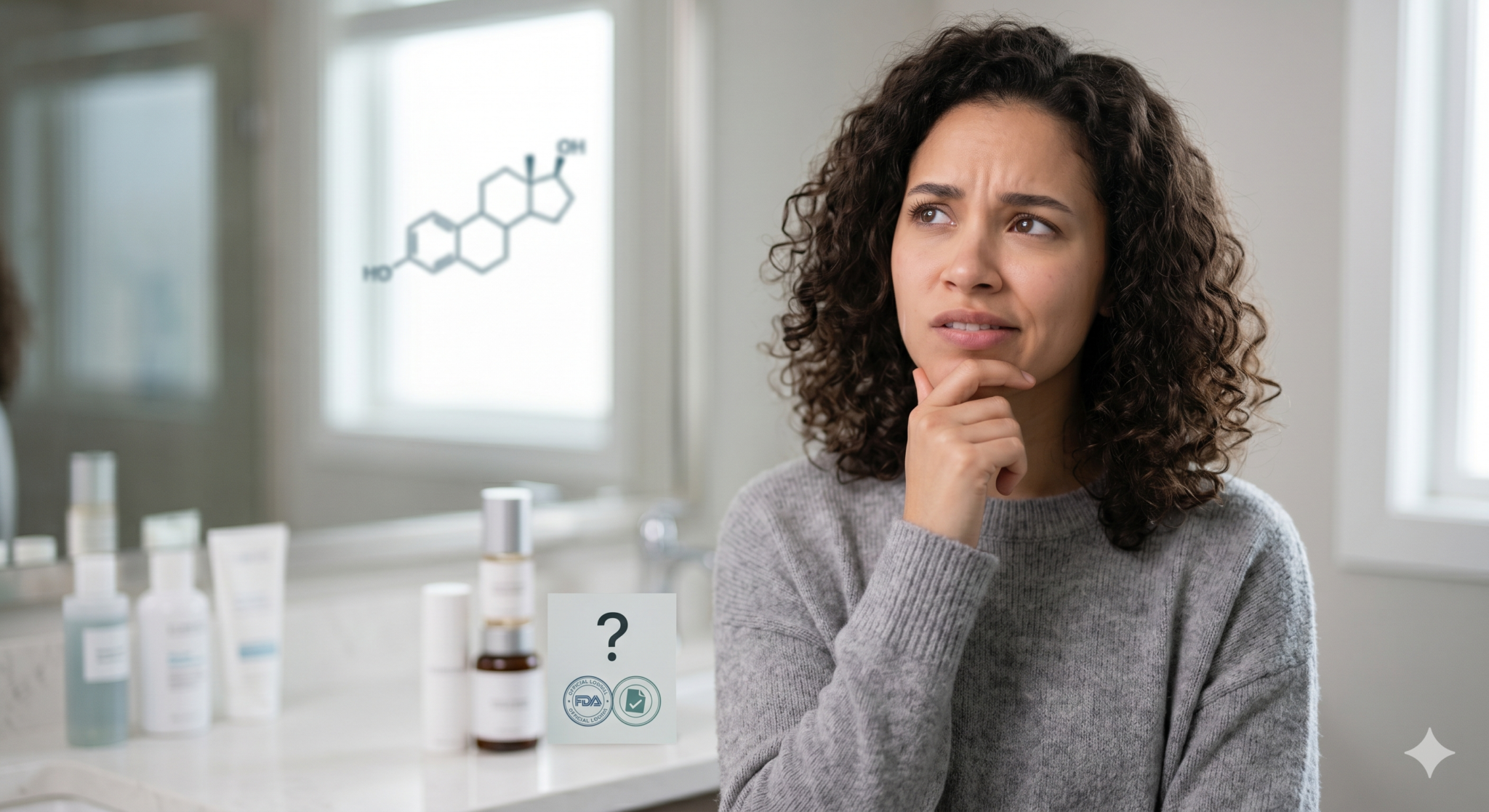
This is the most frequently cited and scientifically complex concern. Parabens are classified as weak xenoestrogens—meaning they can mimic estrogen in the body to a very limited degree. This estrogenic activity is what generated concern about potential hormonal disruption.
Here’s what the science actually shows:
The estrogenic activity of parabens is extremely weak. Studies measuring their estrogenic potency compared to estradiol (the body’s natural estrogen) show that these compounds are anywhere from 10,000 to 1,000,000 times weaker than natural estrogen. Butylparaben is the most potent among common types, but even it is roughly 100,000 times weaker than estradiol.
The body metabolizes parabens quickly. Absorption studies show that when these additives penetrate skin, the body’s esterase enzymes rapidly break them down into para-hydroxybenzoic acid, which has no estrogenic activity. This metabolic breakdown significantly limits any potential hormonal effect.
Exposure levels matter enormously. Even if parabens had meaningful estrogenic activity, the tiny amounts absorbed through skin from cosmetics would need to be compared against the body’s own estrogen levels. The exposure from typical cosmetic use is considered negligible by regulatory toxicologists.
Large epidemiological studies haven’t confirmed the cancer link. Multiple large-scale studies examining actual paraben use and breast cancer incidence have not found a meaningful association. The hypothetical mechanism for harm (weak estrogenic activity → promotes estrogen-sensitive cancers) hasn’t translated into demonstrated real-world risk.
This doesn’t mean parabens should never be questioned or that research should stop. Science is ongoing. But current evidence does not support the conclusion that this preservative family in cosmetics at approved concentrations meaningfully disrupt hormones or increase cancer risk.
Dermatologist Consensus
What do dermatologists actually think? The consensus among board-certified dermatologists and cosmetic chemists is largely reassuring:
Dr. Joshua Zeichner (dermatologist, Mount Sinai): Parabens have an extensive safety record and are considered safe for cosmetic use by dermatologists who understand the research.
Dr. Mona Gohara (dermatologist): The paraben fear is largely overblown. For most people, parabens in skincare are not a concern. People with specific sensitivities should avoid them, but blanket fear isn’t justified by evidence.
The broader dermatological community recognizes that parabens have been used safely for decades, that the concentrations in cosmetics are well below any level of demonstrated concern, and that the “paraben-free” movement is primarily marketing-driven rather than science-driven.
Are Parabens Safe According to Global Health Authorities?
The safety assessment of parabens has been conducted by the world’s most credible regulatory and scientific bodies. Their conclusions deserve significant weight.
U.S. Food and Drug Administration (FDA): The FDA has reviewed the available research on this preservative class in cosmetics and concluded that there is no reason for consumers to be concerned about products containing them. The agency continues to monitor new research but has not found evidence warranting restriction or a ban in cosmetic products.
European Commission’s Scientific Committee on Consumer Safety (SCCS): This body conducts the most rigorous cosmetic ingredient assessments in the world. After comprehensive safety reviews, the SCCS concluded that methylparaben and ethylparaben are safe at current use concentrations in cosmetics. Propylparaben and butylparaben were restricted to lower concentrations (0.14% combined) as a precautionary measure—not because harm was demonstrated, but as conservative risk management. Isobutylparaben and isopropylparaben were restricted from use in products for children under 3 years, also as a precautionary measure.
The key point: European regulation, often considered the world’s most stringent for cosmetics, has not banned parabens—it has set conservative limits for certain types.
Cosmetic Ingredient Review (CIR): This independent body of scientific and medical experts reviewing cosmetic ingredient safety concluded that parabens, at concentrations used in cosmetics, are safe.
General scientific consensus and WHO frameworks: International risk assessment frameworks consistently apply the principle of considering dose alongside hazard. A substance may theoretically cause harm at high doses while being perfectly safe at low doses—this is fundamental toxicology. Parabens’ estrogenic activity, while real, occurs at concentrations so far below those relevant to human health that regulatory bodies don’t consider it a meaningful risk at cosmetic use levels.
The consensus of global health authorities is that parabens in cosmetics are safe as formulated. This doesn’t mean they’re perfect for everyone, but it does mean the fear driving the paraben-free movement is disproportionate to the demonstrated scientific risk.
Why Do Many Brands Promote “Paraben-Free”?
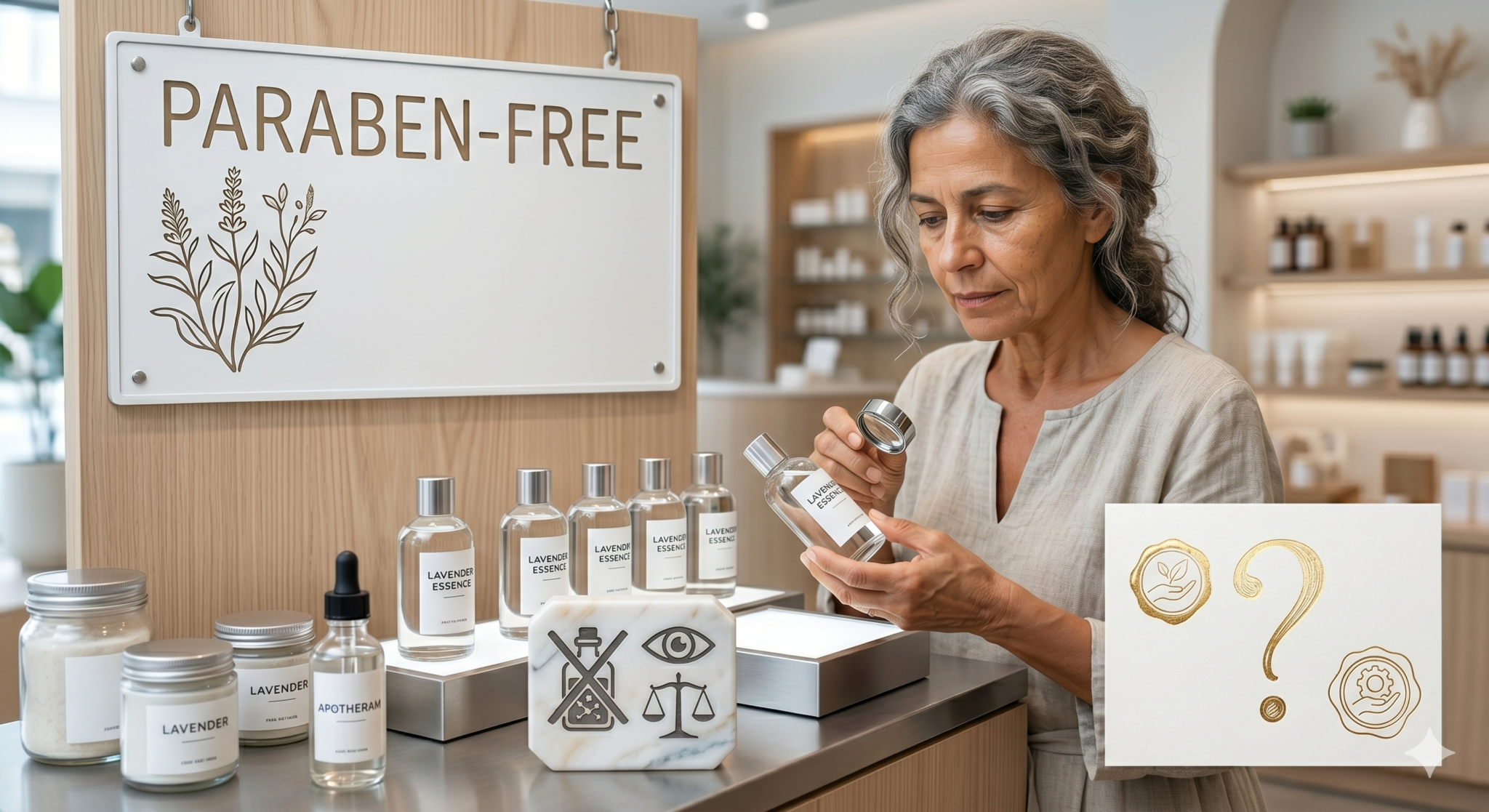
If parabens are largely considered safe by regulators and dermatologists, why has “paraben-free” become such a powerful selling point? The answer lies in consumer psychology and competitive marketing—not science.
Consumer fear psychology: Once fear enters consumer consciousness, it’s extraordinarily difficult to dislodge—even with clear scientific evidence. Brands recognized that consumers had been frightened by the 2004 study’s media coverage, and rather than educating consumers, many chose to capitalize on that fear. Removing parabens and advertising the removal costs relatively little compared to the premium pricing and consumer goodwill it generates.
The clean beauty trend: The broader clean beauty movement created a cultural framework that positioned “natural” and “free-from” labels as inherently virtuous. Parabens—synthetic, chemical-sounding—fit perfectly as a villain in this narrative. Brands riding the clean beauty wave needed to be paraben-free as a basic entry requirement for that consumer segment. You can explore how this trend shapes consumer behavior in our article on [top beauty trends in India in 2026], where we examine the clean beauty phenomenon in depth.
Competitive differentiation: Once a critical mass of brands went paraben-free, staying with this ingredient became a competitive liability. Consumers comparing products on store shelves might choose the “free from” option simply because the labeling implies it’s safer—even if it isn’t. This creates market pressure that pushes brands toward alternative formulations regardless of the science.
Premium pricing justification: “Paraben-free” and associated clean beauty claims allow brands to position products as premium, justifying higher price points. The halo effect of “clean” labeling generates perceived value that translates directly to consumer willingness to pay more.
Understanding this dynamic helps you evaluate marketing claims critically. When a brand prominently advertises what their product doesn’t contain rather than what it does contain and why that matters, marketing psychology is likely doing most of the work.
Are Paraben-Free Products Always Better?
No—and this balanced perspective is crucial for making informed skincare decisions.
The preservative problem: Every water-based skincare product requires some form of preservation to prevent dangerous microbial contamination. When brands remove these cosmetic preservatives, they must replace them with alternative preservatives. The question is never “preservation or no preservation”—it’s “which preservative system is used?”
Common paraben replacements include:
- Methylisothiazolinone (MI) and methylchloroisothiazolinone (MCI): These have significantly higher rates of contact allergy than parabens. The European Scientific Committee on Consumer Safety has issued warnings about their use in leave-on products due to sensitization concerns. (Notably, this makes them more problematic than the preservatives they replaced.)
- Formaldehyde-releasing preservatives (like DMDM hydantoin, diazolidinyl urea): Release small amounts of formaldehyde to prevent microbial growth. Some consumers find these more concerning than these preservatives.
- Phenoxyethanol: A widely used paraben alternative that, at high concentrations, can cause irritation, particularly around the eyes in infants.
- Benzyl alcohol and certain essential oils: Can cause allergic reactions in sensitive individuals.
The irony: Many people who switched to paraben-free products to avoid skin irritation experienced reactions to the alternative preservatives used instead. The “safer” option sometimes proves less safe in practice.
Safety depends on formulation, not labels: A product’s safety comes from its complete formulation—the specific ingredients, their concentrations, how they interact, and their suitability for your skin type. A label saying “paraben-free” tells you one ingredient that’s absent; it tells you nothing about what’s present or how safe the overall formula is.
Paraben-free doesn’t mean preservative-free: Some brands use this implication misleadingly. “Free from parabens” doesn’t mean free from all preservatives, and certainly doesn’t mean the product is more natural or gentler on skin.
Evaluate products on the merit of their complete ingredient list, not on what they’ve removed.
Who Should Consider Avoiding Parabens?
While most people can use paraben-containing products without concern, certain groups may benefit from avoiding them:
People with confirmed paraben allergies: If you’ve had a patch test conducted by a dermatologist that confirmed paraben allergy or contact dermatitis, clearly you should avoid them. This is straightforward management of a known allergy.
People with very sensitive, reactive skin: If your skin reacts to many products and you haven’t identified specific triggers, trialing paraben-free products might be worth exploring—but be equally careful about what preservatives replace them.
People with compromised skin barrier: Severely compromised skin (active eczema flares, post-procedure skin, extremely dry cracked skin) allows greater penetration of all skincare ingredients. Using gentler formulations overall during these periods makes sense, though these compounds specifically aren’t the primary concern.
Dermatologist-recommended cases: If your dermatologist specifically advises avoiding parabens based on your skin’s response pattern or patch testing results, follow that guidance. Individual medical advice supersedes general population-level safety assessments.
People who simply prefer to avoid them: Personal preference matters. If avoiding these synthetic compounds gives you peace of mind and you’re not experiencing problems with alternative formulations, there’s no compelling reason to argue you should use them. Just ensure you’re not inadvertently choosing more problematic preservatives in the process.
Who does NOT need to avoid parabens:
- People with normal, healthy skin who haven’t experienced reactions to paraben-containing products
- People making choices based solely on marketing claims rather than personal experience or medical advice
- People who believe avoiding these additives will prevent cancer—current evidence does not support this
The principle is personal relevance: make decisions based on your skin’s actual responses, any confirmed allergies, and your dermatologist’s guidance—not on what marketing tells you to fear.
How to Check if Your Skincare Contains Parabens
Reading skincare ingredient lists is a valuable skill for understanding exactly what you’re applying to your skin. Finding parabens is straightforward:
The simple rule: look for “-paraben” at the end of ingredient names. Any ingredient with this suffix is a paraben. Common names to look for:
- Methylparaben
- Ethylparaben
- Propylparaben
- Butylparaben
- Isobutylparaben
- Isopropylparaben
- Benzylparaben
Where these cosmetic preservatives appear on ingredient lists: Ingredients are listed in descending order of concentration. These substances, being effective at very low concentrations, typically appear near the end of the ingredient list—indicating they make up a very small percentage of the formula.
Tips for reading ingredient lists:
- Look past the marketing claims on the front of packaging and read the full INCI (International Nomenclature of Cosmetic Ingredients) list on the back or bottom
- Don’t be concerned if you see these preservatives listed—now you understand their function and safety profile
- If you’re avoiding this ingredient, look for what preservative was used instead and research that too
- International beauty products use the same INCI naming convention, making identification consistent across brands and countries
Useful apps and tools: Apps like INCI Decoder, CosDNA, or Think Dirty allow you to scan product barcodes or search ingredient lists for detailed information about each ingredient including parabens, their function, and safety assessments.
Reading clean beauty certifications: Some certifications explicitly exclude these compounds. COSMOS, EcoCert, and similar certifications require paraben-free formulations. If avoiding these preservatives is your goal, looking for these certifications can simplify selection—though always evaluate what alternative preservation system was used instead.
Common Myths About Parabens (Myth vs Truth)
| Myth | Reality |
|---|---|
| Parabens cause breast cancer | No proven causal link exists in peer-reviewed research. The 2004 study that sparked the concern was severely limited and has not been replicated with meaningful results. |
| Parabens are banned everywhere | False. No major global regulatory body has banned parabens. The EU has restricted certain parabens to lower concentrations as a precaution, not due to proven harm. |
| Parabens damage your skin | For most people, parabens at approved concentrations don’t damage skin. They’re actually among the least sensitizing preservatives available. |
| Paraben-free products are always safer | Not necessarily. Alternative preservatives can have higher allergy rates and cause more irritation. Safety depends on the complete formulation. |
| Natural preservatives are better than parabens | Not automatically. “Natural” preservative alternatives vary widely in safety and efficacy. Some essential oils used as preservatives have higher irritation potential than parabens. |
| All parabens are the same | Different parabens have different potencies and are used at different concentrations. Methylparaben and ethylparaben are considered lower concern than propylparaben or butylparaben at higher concentrations. |
| Parabens accumulate in the body dangerously | Parabens are rapidly metabolized by the body’s enzymes into compounds that are easily excreted. They don’t accumulate in the way persistent organic pollutants do. |
| You should avoid all products with parabens | Unless you have a confirmed allergy or specific medical advice, there’s no scientific justification for blanket avoidance of paraben-containing products. |
Final Verdict: Are Parabens Harmful or Just a Marketing Myth?
After examining the evidence comprehensively, the answer is clear: for most people, parabens in skincare are not harmful at concentrations approved by regulatory authorities—and the fear surrounding them is primarily a marketing myth.
The science tells us:
- This preservative family has been used safely for over 90 years
- Regulatory bodies worldwide—including the FDA and the European Commission—have reviewed the evidence and confirmed safety at approved concentrations
- The estrogenic activity of these synthetic compounds is thousands to millions of times weaker than natural estrogen and is further reduced by rapid metabolic breakdown
- No large, well-designed study has established a causal link between cosmetic use of these preservatives and cancer or hormonal disruption
- Parabens are among the least sensitizing preservatives available, with lower contact allergy rates than many alternatives
The fear tells us:
- A single, limited study in 2004 suggested a question worth investigating—media blew it into a definitive verdict
- Marketing exploited consumer anxiety to create a profitable “paraben-free” category
- The clean beauty movement needed villains, and these additives—synthetic, unfamiliar-sounding—were perfect candidates
The balanced truth: Some individuals—those with confirmed allergies to this preservative class, extremely sensitive skin, or specific dermatologist recommendations—may benefit from avoiding these products. For everyone else, the evidence supports that parabens in cosmetics represent a much smaller risk than marketing suggests.
When you see “paraben-free” on a product and ask yourself are these cosmetic preservatives harmful for skin, you can now answer with evidence rather than fear: these substances, as used in skincare, are considered safe by the world’s leading health authorities. What matters more than avoiding specific ingredients is understanding your own skin, knowing your actual allergies, and making decisions based on science rather than marketing narratives.
Smart skincare is informed skincare. Now you’re equipped to make that distinction.
FAQs
Are these preservatives banned in India?
No, parabens are not banned in India. The Bureau of Indian Standards and the Cosmetics Rules under the Drugs and Cosmetics Act permit the use of this ingredient in cosmetics at regulated concentrations. India largely follows internationally established safety guidelines for cosmetic ingredients. Products sold legally in India can contain these preservatives. The “paraben-free” labeling common on Indian products is a voluntary marketing choice rather than a legal requirement, reflecting consumer demand driven by global trends rather than Indian regulatory action.
Are these compounds safe for daily use?
Yes, for most people, parabens are safe for daily use in skincare products at concentrations approved by regulatory authorities. The FDA, European Commission, and other global bodies have reviewed cumulative exposure data and determined that daily use of products containing these preservatives does not pose a health risk for the general population. The concentrations used in cosmetics are very low (typically 0.01-0.3%), and the body metabolizes absorbed quantities quickly. People with confirmed allergies should avoid this ingredient class, and anyone experiencing persistent skin reactions should consult a dermatologist.
Are these additives safe according to dermatologists?
The majority of board-certified dermatologists consider this preservative family safe for use in skincare products at approved concentrations. Dermatologists generally align with the scientific consensus established by regulatory bodies—that the evidence doesn’t support avoiding these cosmetic preservatives for the general population. They may recommend paraben-free products to specific patients with confirmed paraben contact allergies, but this is individualized medical advice rather than a blanket recommendation. Dermatologists often note that the preservatives used to replace these substances in “paraben-free” products sometimes have higher rates of contact allergy, making blanket paraben avoidance counterproductive for many consumers.
Do these preservatives cause hormonal imbalance?
Current scientific evidence does not support the conclusion that this ingredient class in cosmetics cause hormonal imbalance in humans. While these compounds have very weak estrogenic activity (10,000 to 1,000,000 times weaker than natural estrogen), they are rapidly metabolized by skin and liver enzymes before they could meaningfully influence hormone levels. Regulatory toxicologists, when evaluating cumulative exposure from typical cosmetic use, have not found evidence of meaningful hormonal disruption. Multiple large studies have not confirmed a real-world association between cosmetic paraben use and hormone-related health conditions. The concern is theoretically grounded but has not translated into demonstrated harm at real-world exposure levels.