
The Indian beauty industry is undergoing a revolutionary transformation. From the bustling streets of Mumbai to the tech-savvy homes of Bangalore, consumers are becoming more conscious, informed, and selective about what they apply on their skin. Gone are the days when beauty meant blindly following every viral trend or celebrity endorsement.
Today’s Indian beauty consumer is empowered by dermatologists sharing knowledge on Instagram, ingredient databases at their fingertips, and a growing understanding of how climate and genetics influence skin behavior. The humid summers of Chennai demand different solutions than the dry winters of Delhi. Oily, acne-prone Indian skin types require approaches distinct from Western beauty standards that dominated our feeds for years.
But here’s the truth: not every viral beauty trend deserves a place in your routine. The gap between marketing hype and scientific reality has never been wider. Some trends are backed by dermatological research and real results, while others are purely designed for social media engagement, offering little beyond aesthetic appeal.
This comprehensive guide examines the top beauty trends dominating India in 2026—separating evidence-based practices from passing fads. You’ll discover which trends dermatologists actually recommend, who each trend suits best, and most importantly, which ones are worth your time and money. Whether you’re dealing with pigmentation, acne, or simply want healthier skin, this article provides the clarity you need to make informed beauty decisions.
How Beauty Trends Are Changing in India
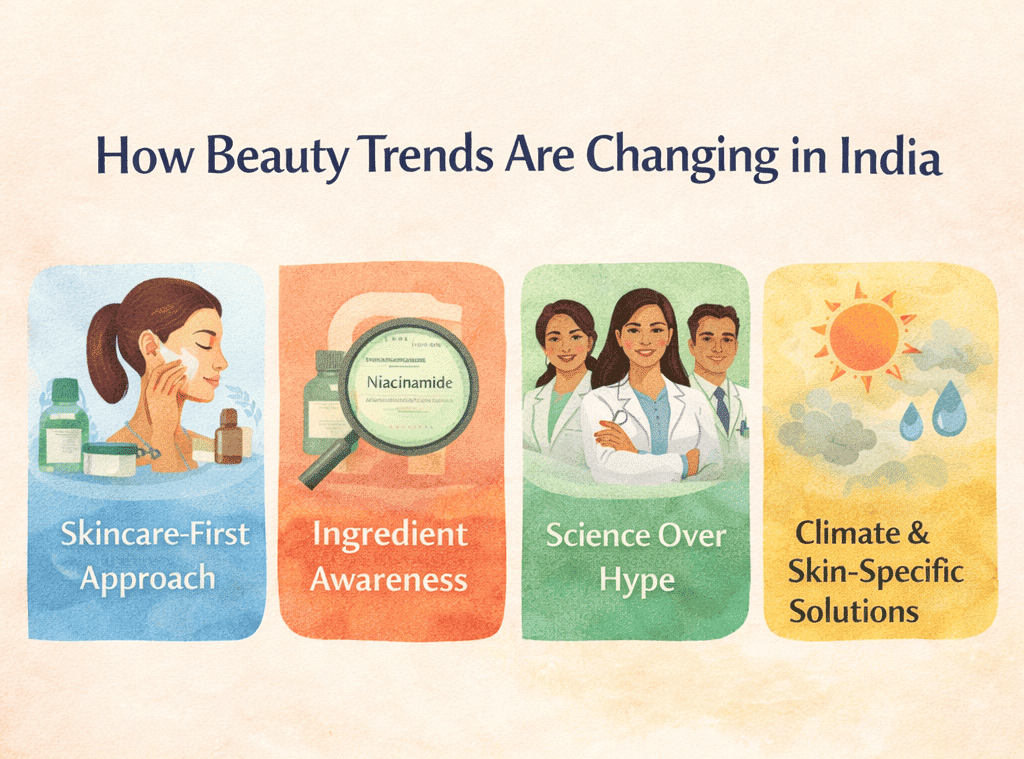
The Indian beauty landscape of 2026 looks dramatically different from just five years ago. The most significant shift? A complete mindset transformation from makeup-first to skincare-first approach. Consumers now understand that no amount of concealer can replace genuinely healthy, well-cared-for skin.
This evolution stems from multiple factors. Social media, while still influential, has matured beyond before-and-after filters. Indian dermatologists like Dr. Kiran Sethi, Dr. Jaishree Sharad, and Dr. Geetika Mittal Gupta have built massive followings by educating audiences about ingredients, skin biology, and the science behind beauty claims. Their voices carry more weight than paid influencer partnerships.
Ingredient awareness has exploded. Terms like niacinamide, ceramides, hyaluronic acid, and peptides are no longer medical jargon—they’re household vocabulary. Indian consumers now flip products to read ingredient lists before checking prices, questioning whether marketing claims match formulation reality. They’re asking: Does this product contain enough active ingredients to work? Is the pH suitable for my skin? Are the preservatives safe?
This skepticism is healthy and necessary. For decades, beauty marketing relied on aspirational imagery and celebrity faces rather than transparent formulation details. The 2026 consumer wants proof, not promises. They research clinical studies, seek dermatologist reviews, and share experiences in community forums before making purchases.
Science and simplicity are winning over complicated multi-step routines. The Korean 10-step skincare trend, once aspirational, is being replaced by minimalist, targeted approaches. People recognize that more products don’t equal better results—often, they cause irritation and confusion about what’s actually working.
Climate-specific and skin-type-specific solutions are finally getting attention. Indian brands are formulating for Indian conditions rather than adapting Western formulas. This localization considers humidity levels, pollution exposure, sun intensity, and genetic predispositions to certain skin concerns like hyperpigmentation and melasma.
Skincare Trends That Will Dominate India in 2026
Skin Barrier Repair Focus
The skin barrier repair trend represents perhaps the most scientifically sound movement in Indian skincare. Your skin barrier—the outermost layer of your skin—functions as a protective wall preventing moisture loss and blocking irritants, pollutants, and bacteria. When compromised, it leads to sensitivity, inflammation, chronic acne, and accelerated aging.
Indian skin faces unique barrier challenges. High pollution levels in major cities create oxidative stress. Extreme temperature variations between air-conditioned indoors and scorching outdoors shock the skin. Hard water, common across many Indian cities, disrupts the skin’s natural pH balance. Add to this the overuse of harsh scrubs, acids, and bleaching treatments that were historically popular in Indian beauty culture, and you have an epidemic of damaged skin barriers.
The 2026 solution? Ceramides, niacinamide, and gentle actives dominating product formulations. Ceramides are lipid molecules that form the “mortar” between your skin cells, literally holding your barrier together. Products containing ceramides help rebuild this protective structure, making skin more resilient against environmental stressors.
Niacinamide (Vitamin B3) has become the superstar ingredient for Indian skin. It addresses multiple concerns simultaneously: reduces hyperpigmentation (a primary concern for Indian consumers), controls oil production, minimizes pores, and strengthens the skin barrier. Unlike harsh actives, niacinamide is gentle enough for sensitive skin while delivering visible results.
Minimalist Skincare Routines
The minimalist skincare movement is revolutionizing Indian beauty routines. After years of accumulating dozens of products, consumers are discovering that less truly is more. This trend focuses on 3-5 high-quality products that address specific needs rather than layering countless steps that overwhelm and confuse skin.
What changed? People started experiencing the consequences of over-complicated routines: persistent irritation, inability to identify which products caused breakouts, wasted money on redundant items, and most tellingly, skin that looked worse despite increased effort and expense.
The minimalist approach prioritizes quality over quantity. A typical effective routine now includes: gentle cleanser, targeted treatment (serum with actives), moisturizer, and sunscreen. Some add one additional step for specific concerns, but the era of 10+ product routines is fading.
This trend directly combats the over-exfoliation problem that plagued Indian skincare. For years, physical scrubs, DIY treatments with lemon and baking soda, and aggressive acid use damaged countless skin barriers. The minimalist philosophy recognizes that skin has natural exfoliation cycles—interfering too frequently causes more harm than benefit.
Climate-Specific Skincare
Climate-specific skincare acknowledges what Indian consumers have always known instinctively: skin behaves differently in Mumbai’s humidity versus Delhi’s dryness. The 2026 beauty industry is finally catching up with formulations tailored for India’s diverse climate zones.
For humid regions (coastal areas, monsoon-prone cities): Lightweight, gel-based formulas dominate. These provide hydration without heaviness that triggers excess sebum production. Ingredients like niacinamide help control oil while maintaining moisture balance.
For dry climates (North India during winter, high-altitude regions): Richer creams with occlusive ingredients like ceramides, shea butter, and squalane prevent transepidermal water loss. Humectants like hyaluronic acid and glycerin draw moisture into skin, while occlusives seal it in.
For polluted environments (Delhi, Kolkata, major metropolitan areas): Antioxidant-rich formulations combat free radical damage from particulate matter. Ingredients like vitamin C, resveratrol, niacinamide, and green tea extract neutralize oxidative stress. Double cleansing has become standard to remove pollution particles that regular cleansing misses.
Clean Beauty Trends in India – What’s Real in 2026
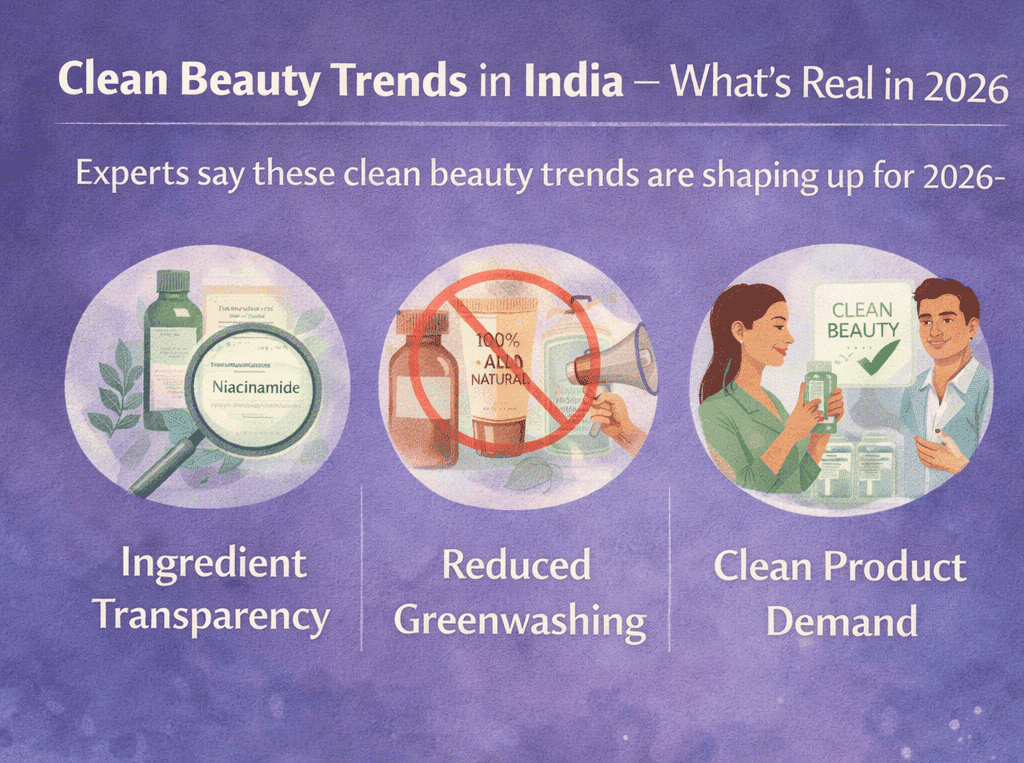
The Clean beauty movement has swept through India with both promise and confusion. At its core, clean beauty advocates for products formulated without potentially harmful ingredients, emphasizing natural, sustainable, and transparent formulations. However, the lack of regulation around the term “clean” has created a marketing playground where not all claims are created equal.
What’s genuinely changing: Indian consumers are demanding ingredient transparency. They want to know what’s in products and why. Brands that clearly list ingredients, explain their functions, and avoid deceptive labeling are gaining trust and market share.
While clean beauty is gaining popularity, not all claims are backed by science. Understanding which clean beauty standards make sense and which are purely marketing tactics is essential for making informed decisions about products.
The real conversation should focus on: Does this specific ingredient serve a purpose in the formulation? Is it present in safe concentrations? Is there credible research supporting its safety and efficacy?
Beauty Tech & AI Trends in India
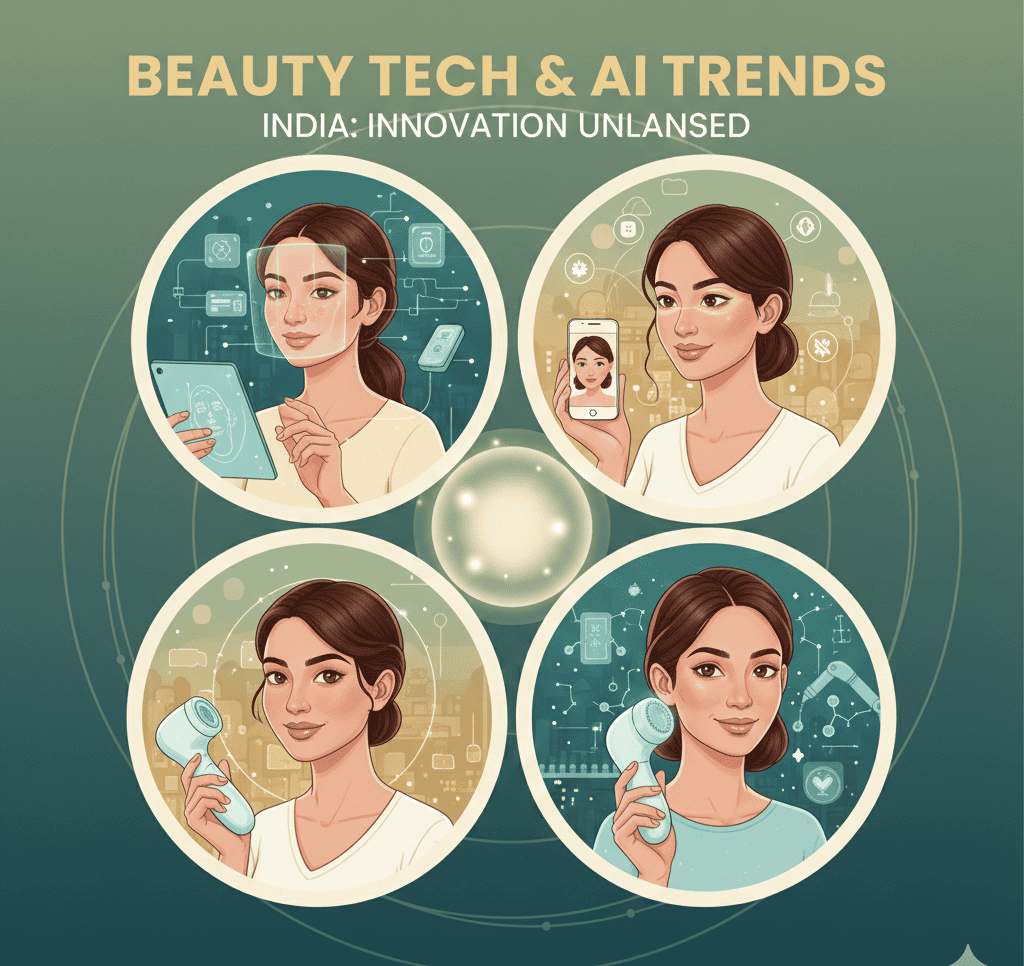
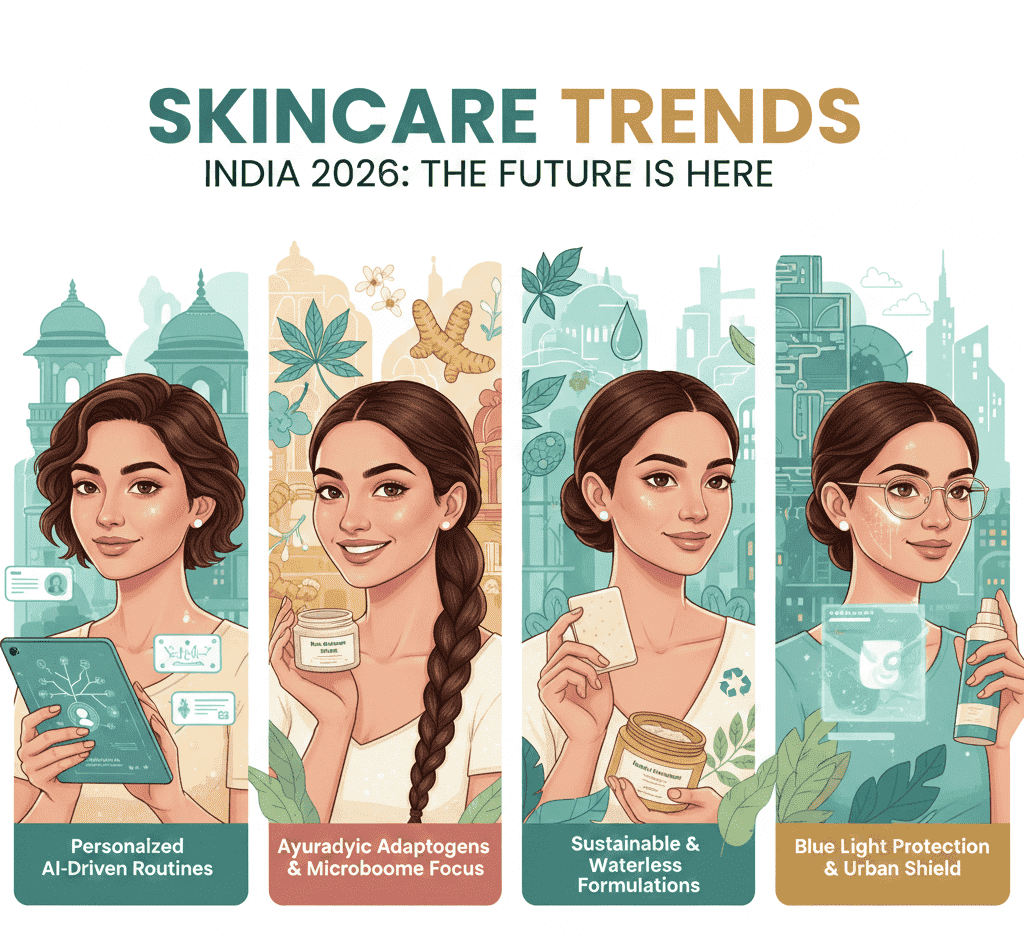
Beauty technology and AI integration represent the frontier of personalized skincare in India. The 2026 beauty landscape includes virtual consultations, AI-powered skin analysis apps, and algorithm-generated product recommendations that promise customized solutions for every individual.
AI skin analysis tools use smartphone cameras to assess skin conditions—detecting acne, hyperpigmentation, wrinkles, pore size, and even predicting aging patterns. Apps like Skin360, ModiFace, and even brand-specific diagnostic tools claim to provide accurate skin assessments comparable to in-person dermatologist evaluations.
But are these tools reliable? The answer is: partially, with important caveats. AI skin analysis can identify obvious conditions like acne or surface-level concerns. However, it cannot diagnose underlying medical conditions, assess skin texture accurately, or replace the nuanced judgment of an experienced dermatologist who considers your medical history, lifestyle, and individual response patterns.
Expert consensus: Use beauty tech as a supplementary tool, not a replacement for professional care. AI can provide useful insights and track progress, but serious concerns require human expertise.
Makeup Trends Indians Are Actually Adopting
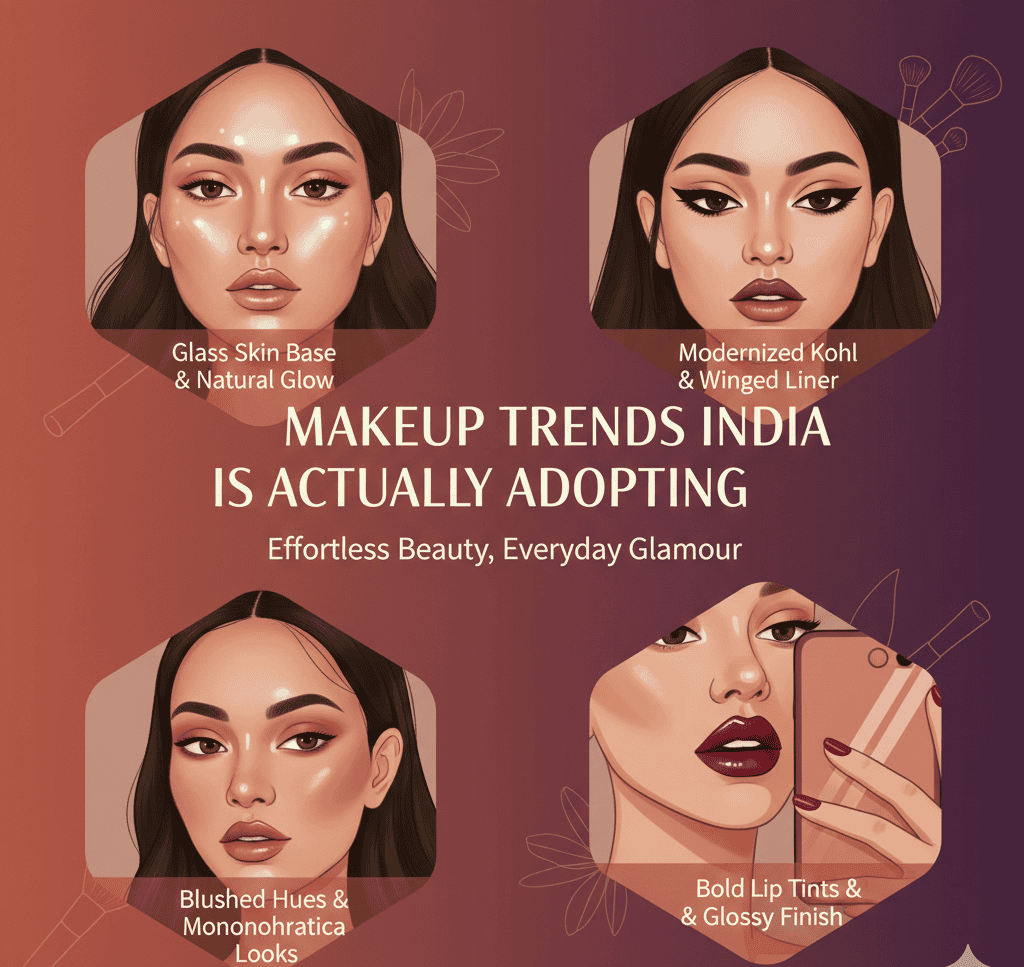
Skin-like Base Makeup
The skin-like base makeup trend is transforming how Indians approach foundation and complexion products. Heavy, full-coverage bases are being replaced by lightweight, breathable formulas that enhance rather than mask natural skin.
Tint and skincare hybrids dominate 2026 launches. These products combine coverage with beneficial ingredients like niacinamide, SPF, and hyaluronic acid. BB creams, CC creams, and skin tints provide light coverage while treating skin concerns. The goal is radiant, healthy-looking skin rather than airbrushed perfection.
Natural Brows & Soft Glam
Natural brows and soft glam makeup represent a broader cultural shift toward effortless, wearable beauty. The heavily contoured, Instagram-perfect makeup look is being replaced by natural elegance suitable for daily life.
The decline of heavy contouring reflects practical realities. Most women don’t have time or desire for intensive makeup routines requiring multiple products and techniques. Additionally, heavy contouring rarely looks good in real life—it’s designed for photographs and specific lighting conditions.
Haircare Trends in India for 2026
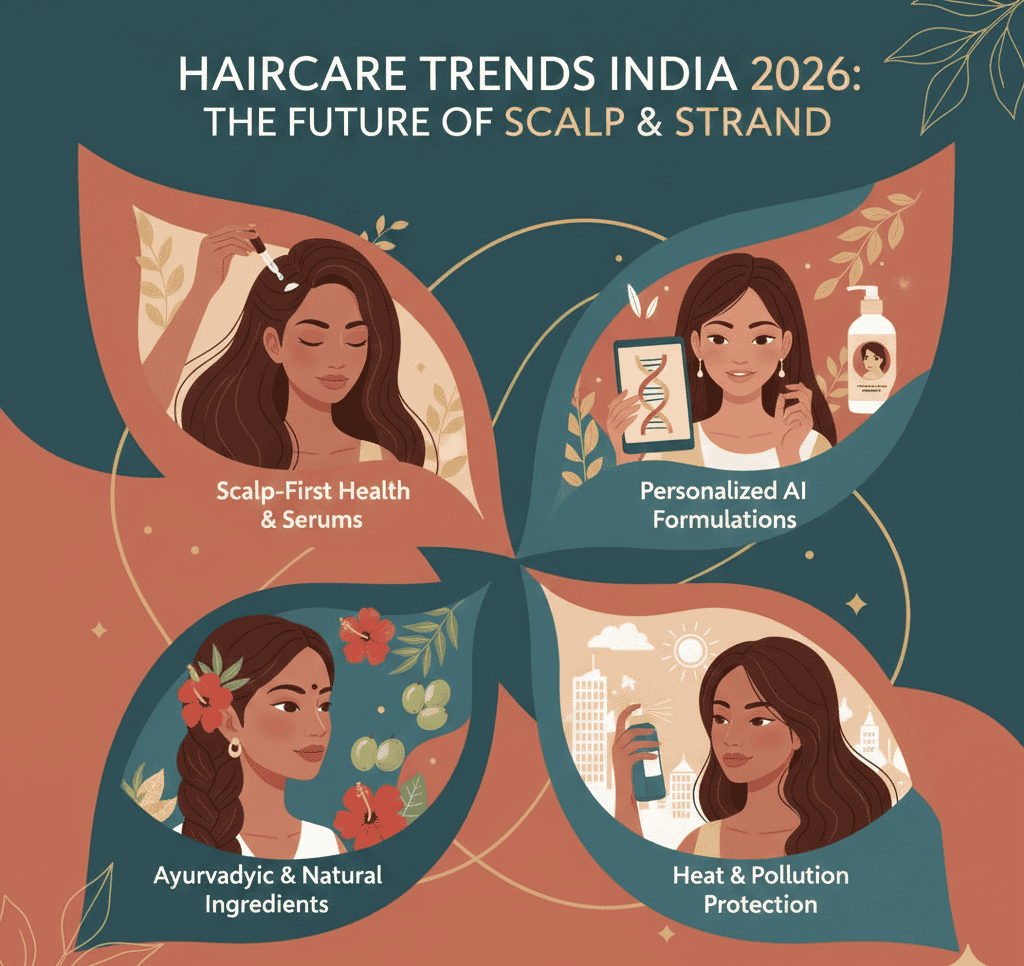
The Indian haircare industry in 2026 is experiencing a transformation parallel to skincare—science-based approaches replacing tradition without abandoning cultural wisdom that actually works.
Scalp care focus has emerged as the foundation of healthy hair. Just as skincare shifted toward barrier health, haircare is recognizing that scalp health determines hair quality. Clogged follicles, inflammation, and imbalanced scalp microbiome directly impact hair growth, texture, and loss.
Hair fall solutions backed by science are replacing fear-mongering marketing. Indian consumers, particularly women dealing with post-pregnancy hair loss, stress-related shedding, and genetic thinning, are demanding evidence-based solutions.
Ayurvedic and clinical blend trend: Rather than positioning traditional ingredients against modern science, innovative brands are combining both. Bhringraj, amla, and reetha (traditional Ayurvedic ingredients) are being formulated alongside clinically proven actives like biotin, keratin, and peptides.
Viral Beauty Trends That May Not Last
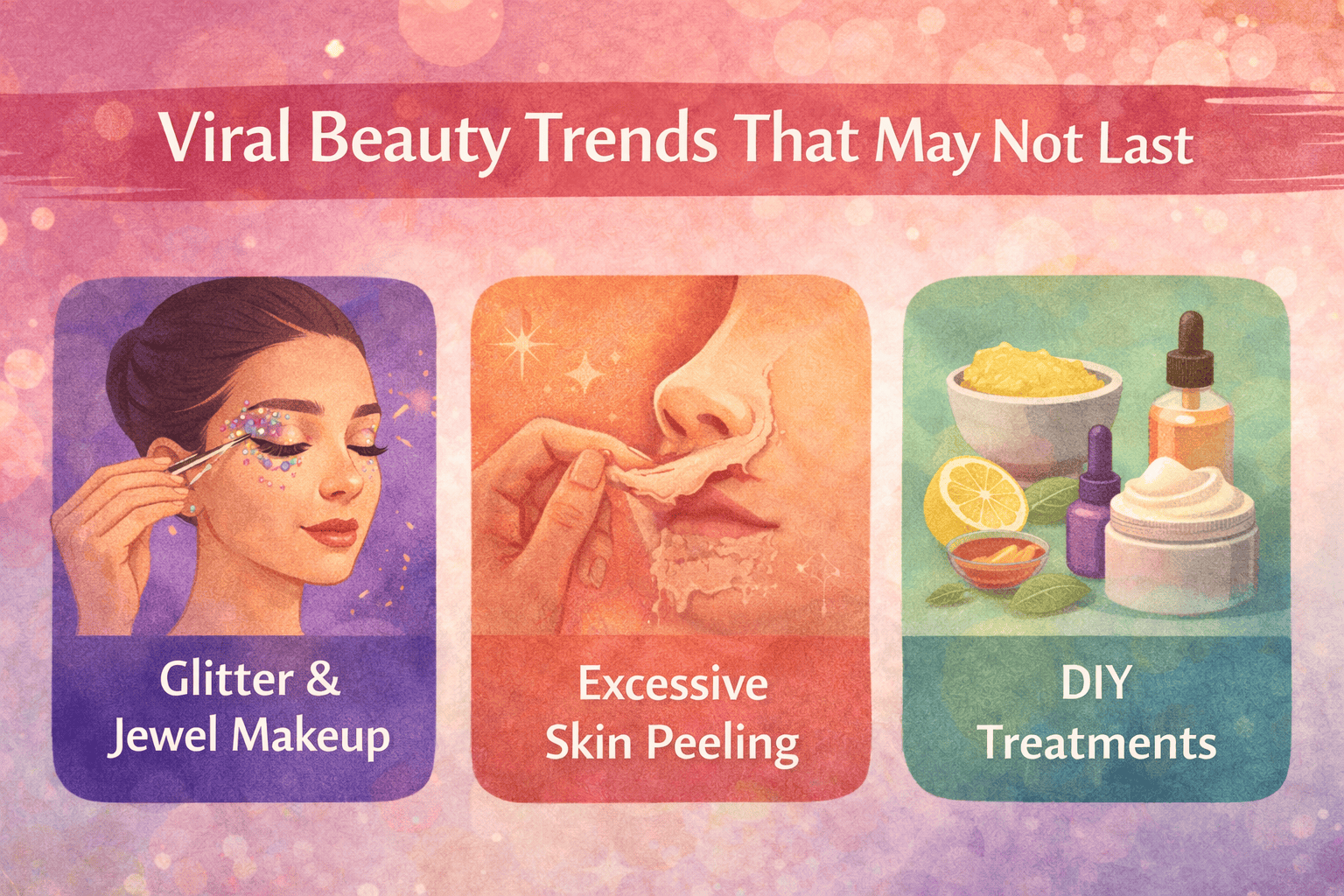
Not every trending beauty practice deserves longevity. Some viral beauty trends are designed purely for social media engagement, offering visual appeal without substantive benefits—and sometimes causing actual harm.
Examples of questionable viral trends: Rice water for everything, toothpaste on pimples, lemon juice for brightening, and freezing skincare products. These trends lack scientific basis and may cause more harm than good.
The danger lies in quick fixes versus long-term skin health thinking. Real skincare results require months of consistent, appropriate care. Products promising transformation in days are either using filters/editing or setting unrealistic expectations.
Expert Opinions on Beauty Trends
Leading dermatologists across India share remarkably consistent perspectives on navigating beauty trends responsibly and effectively.
Consistency trumps everything. Dr. Kiran Sethi emphasizes that “the best skincare product is the one you’ll use consistently. Jumping between trends every month prevents you from seeing real results and often damages your skin in the process.”
Ingredient knowledge is empowerment. Rather than memorizing product names or following brand loyalty, dermatologists encourage consumers to understand what active ingredients do and which concentrations are effective.
Skin-type-based routines are non-negotiable. Every dermatologist stressed that effective skincare starts with accurate skin type identification. The most expensive product will fail if it’s wrong for your skin type.
Who Should Follow Which Beauty Trends?
Different beauty trends serve different needs, skin types, and lifestyles. Here’s practical guidance:
For Beginners: Focus on minimalist routines and barrier repair trends. Begin with three products: gentle cleanser, simple moisturizer, and broad-spectrum sunscreen.
For Acne-Prone Skin: Prioritize skin barrier repair and climate-specific skincare. Focus on gentle, non-comedogenic products with ingredients like niacinamide, salicylic acid, and ceramides.
For Sensitive Skin: Minimalist routines and carefully evaluated clean beauty work best. Focus on fragrance-free, hypoallergenic products. Barrier repair is crucial.
For Busy Professionals: Minimalist skincare, makeup-skincare hybrids, and climate-specific products are ideal. You need routines that are effective but time-efficient.
Universal Recommendation: Regardless of skin type or concern, barrier health should underpin every routine. Sun protection is non-negotiable for everyone. Consistency beats intensity universally.